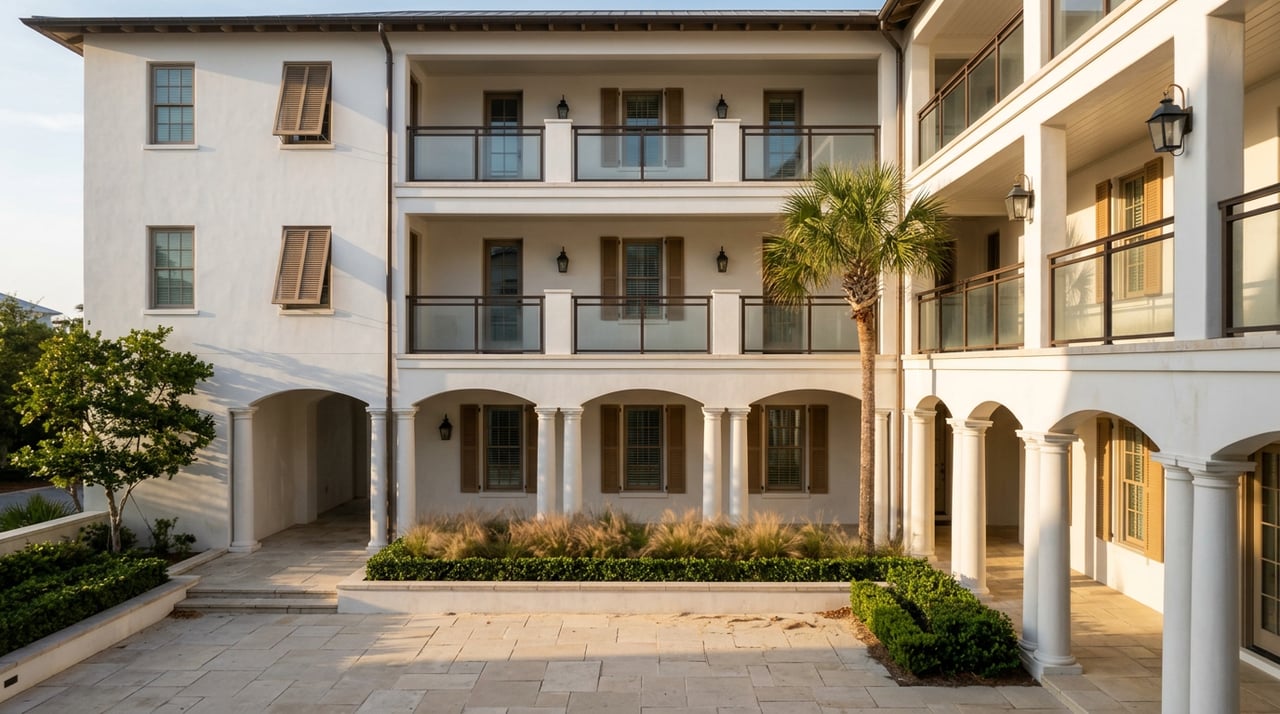
Two Gulf-front condos went into contract this fall carrying almost identical asking prices, similar square footage, and comparable floor plans. One buyer walked into a monthly HOA fee that hadn't moved all year. The other opened a 2026 budget packet and found dues up 11 percent, driven almost entirely by a single line item nobody had flagged during the showing: the reserve contribution.
That is the story Panama City Beach's condo market is actually telling right now, and it has almost nothing to do with the number most buyers check first.
The median price is the calm part of the story
If you have been watching Panama City Beach from a distance, the headline number looks stable, even a little sleepy. As of September 10, 2026, active beach condo listings across the market carried a median list price of $477,950, with the typical unit averaging 155 days on the market and roughly $470 per square foot. Widen the lens to all home types and the picture is similarly steady: over the three months ending in May 2026, the median sale price across Panama City Beach sat near $384,000, down modestly from the same period a year earlier.
None of that is alarming. It reads like a market catching its breath after a few frenzied years, not one in trouble. But a citywide median blends condos, townhomes, single-family homes, new construction, and decades-old towers into one number, and that blend is exactly what hides the part of the market that has actually shifted this year.
The part that moved: what the building charges you every month
Florida's condo associations have spent the past two years absorbing the fallout of statewide reserve-funding requirements adopted after the Surfside collapse. Every association had to commission a structural integrity reserve study and start funding repairs on a real schedule instead of deferring them. In 2025, House Bill 913 gave boards some flexibility in how they finance that catch-up, including access to lines of credit, but it didn't erase the underlying math. Someone still has to pay for the roof, the balconies, and the elevator systems on a real timeline.
That is why two buildings on the same beach can post opposite budgets in the same year. One building's publicly posted 2026 numbers showed dues rising 11 percent even though the master insurance line actually dropped slightly, from roughly $802,000 to $791,000. The increase came almost entirely from the reserve contribution, which jumped from about $995,000 to $1.44 million in a single budget cycle. A different beachfront tower's fee for 2026 stayed completely flat.
Same coastline, same exposure to wind and salt air, same general insurance climate. Different board decisions about how aggressively to fund reserves this year rather than next.
Across the market, condo dues in Panama City Beach typically run from about $500 to $1,400 a month, with a median hovering around $831. Beachfront high-rises with elevators, pools, and heavy guest turnover sit at the top of that range. Inland villas and low-rise buildings without elevators tend to land at the bottom, and a handful of single-family neighborhoods, like Bid-a-wee, carry only a voluntary, low-cost association instead of condo-style dues at all.
The spread inside that range is what actually separates two otherwise comparable units this year, not the sale price.
Why the fee number alone still isn't the full picture
A lower fee is not automatically the better deal, and a higher one is not automatically a warning sign. The number that matters more is whether the fee reflects what the building actually needs. An association that has under-funded its reserves for a decade can look attractive on a listing sheet and then hand the new owner a special assessment, and those assessments in Panama City Beach have run anywhere from roughly $5,000 to more than $50,000 per unit when a building has to cover a major repair it didn't save for.
That is the practical reason to ask for the actual budget and the most recent reserve study before writing an offer, not just the monthly fee quoted in the listing. A building funding its reserves on schedule this year is buying itself out of that risk. A building that isn't is passing the bill to whoever owns the unit when the bill comes due.
The other average that's quietly misleading buyers
If HOA fees are the number hiding behind the median price, short-term rental income is the number hiding behind the average. Industry trackers reported meaningfully different figures for Panama City Beach in 2026, ranging from an average trailing twelve-month revenue near $36,700 per active listing as of June 2026 to other trackers citing medians closer to $40,000 to $45,000 depending on methodology and which slice of the roughly 19,000-plus active listings they sampled.
That spread exists because Panama City Beach's rental market is not one pool of similar units. Occupancy runs 80 to 90 percent from March through August, then eases into a shoulder season from September through November that still stays busy on weekends thanks to draws like the Thunder Beach Motorcycle Rally and the fall seafood festivals. A unit in a building with an active, well-managed rental program and strong beach access captures a very different share of that demand than a unit in a building where owners self-manage or where guest turnover is limited by association rules.
It also matters that operating a short-term rental inside city limits carries real compliance costs that eat into net income before an owner ever gets to the top-line revenue figure. Panama City Beach requires a Vacation Rental Certificate under City Ordinance 1632, annual fire and life-safety inspections, and a designated local contact available around the clock who can respond in person within an hour. Violations escalate quickly, starting at a $500 fine for a first offense and climbing to $1,000 plus possible loss of the rental certificate for a third violation within twelve months. None of that shows up in a gross revenue estimate, and all of it shows up in what an owner actually keeps.
What this means if you're comparing two units this fall
Buyers currently have more room to ask questions than they did during the market's fastest years, and that room is worth using. Before comparing two condos on price alone, request the current year's budget, the most recent reserve study, and the building's assessment history going back several years. Ask directly whether the fee is funding real repairs on schedule or holding steady because the board is deferring something. If rental income matters to the purchase, ask the association about its rental program participation rate and any age or turnover restrictions the board has adopted, since many buildings tightened these rules as part of Panama City Beach's broader shift away from its old spring break identity toward a steadier family and couples market.
Sellers benefit from the same discipline in reverse. A condo with a healthy, well-documented reserve position and a clean assessment history is easier to sell at a fair price precisely because it removes the guesswork a cautious buyer would otherwise price in. Being ready to hand over that documentation before a buyer has to ask for it is one of the simplest ways to keep a listing competitive in a market where buyers are comparing more carefully than they were even a year ago.
A few questions worth asking before you sign anything
Does a higher HOA fee always mean a healthier building? Not necessarily. It means the association is funding something, but whether that something is a well-managed reserve schedule or a scramble to catch up after years of under-funding depends on the actual budget documents, not the fee alone.
Can a condo association restrict short-term rentals even if the city allows them? Yes. The City of Panama City Beach regulates registration, safety inspections, and compliance for vacation rentals, but individual associations can adopt their own, often stricter, rules on rental frequency, minimum stays, or renter age, and those private rules aren't something the city enforces or overrides.
Are special assessments something a seller has to disclose? Buyers should always request the association's most recent budget, reserve study, and any notices of pending or recently approved assessments as part of due diligence. Reviewing those documents before closing, rather than relying on the listing description, is the most reliable way to understand what you're actually taking on.
Panama City Beach's median price will keep showing up in every market report as the easy headline. The number that actually decides what a buyer pays each month, and what a seller needs to have ready before listing, lives one layer deeper, in the budget packet most people don't ask to see until it's already too late to negotiate around it.
If you're weighing two buildings, two budgets, or a rental projection that doesn't quite add up, The Gettings Group can walk through the actual numbers with you before you write an offer. Work With Us.