For several years, real estate along Scenic Highway 30A moved at a pace few coastal markets had ever experienced.
Inventory disappeared. Buyers competed aggressively. Properties appreciated rapidly, and in some of South Walton’s most sought-after communities, values did not simply rise. They reset.
Today, the market looks different.
Buyers have more choices. Sellers must be more strategic. Properties are taking longer to absorb, and pricing has become far more important than it was during the pandemic-era boom.
But different does not mean weak.
The 30A market in 2026 is more balanced, more selective, and in many ways, healthier than it has been in years. Demand remains active, trophy communities continue to command extraordinary premiums, and properly positioned homes are still moving.
What has changed is the standard.
Buyers are no longer purchasing indiscriminately. They are concentrating capital around the properties, communities, and locations they believe will remain most defensible over time.
That is the defining story of 30A real estate in 2026.
The Market Has Entered a More Sustainable Phase
The same-property index used in this analysis, which tracks changes in value while controlling for differences between the homes being sold, roughly doubled between 2018 and early 2022.
That period represented one of the most significant appreciation cycles in 30A history.
Since then, the market has moved through a period of normalization. Depending on the price tier and community, values generally reached their high points between 2022 and 2024 before settling into a more measured pattern.
The latest complete reading places the market’s raw median price at approximately $688 per square foot, compared with a trailing 12-month average of approximately $714 per square foot.
That represents a difference of roughly 4%.
Rather than signaling a collapse, the data points to a market that is stabilizing after an extraordinary run.
That distinction matters.
The rapid appreciation of 2020 through 2022 was never likely to continue indefinitely. A more sustainable market allows buyers to make thoughtful decisions, gives sellers clearer pricing signals, and creates a stronger foundation for long-term ownership.
30A has not lost its appeal. The market has simply moved from urgency to selectivity.
Different Price Tiers Are Creating Different Opportunities
One of the most important lessons from the 2026 data is that 30A cannot be understood as a single market.
The analysis separates the corridor into six value bands, beginning with trophy-tier properties and moving through more attainable segments.
The highest price tier experienced the greatest appreciation during the boom and has since recorded the largest adjustment. Values in that segment are approximately 26% below their 2023 peak.
The next two luxury tiers followed a similar pattern, though their adjustments were more moderate.
The lower three tiers have proven considerably more stable. Rather than experiencing the same degree of repricing, they have generally held their value or continued moving modestly higher.
This creates opportunity on both sides of the market.
For buyers, the upper tiers may now offer access to properties that were difficult to negotiate during the height of the boom.
For sellers, the lower and middle price bands continue to benefit from a larger pool of qualified buyers and stronger transaction activity.
The fourth pricing band has emerged as the liquidity engine of the corridor. It currently contains the greatest number of active listings, the highest number of closed transactions, and the fastest absorption rate.
That is an encouraging sign.
It shows that buyers remain engaged when price, quality, and utility align. Properties that can function as second homes, rental investments, or future primary residences continue to attract meaningful demand.
The market is active. It is simply rewarding the right positioning.
More Inventory Is Giving Buyers Confidence
The analysis currently shows approximately 13 to 17 months of inventory across the six studied price tiers.
That is considerably higher than the levels seen during the pandemic boom, when buyers often had to act before they had fully evaluated a property.
Today’s inventory gives buyers room to compare.
They can assess construction quality, insurance costs, rental performance, beach access, community amenities, view protection, carrying costs, and long-term resale potential before making a decision.
That additional time can create a more confident buyer.
It can also create a better transaction.
A buyer who understands the property, the market, and the economics is often more comfortable holding the asset through future cycles. That matters in a second-home and luxury market where ownership decisions are rarely based on price alone.
For sellers, higher inventory raises the standard for preparation and presentation. Homes must be positioned thoughtfully, marketed professionally, and priced in relation to the properties buyers can choose from today.
The strongest listings are still attracting attention.
The difference is that buyers now have enough information to recognize which listings deserve it.
Trophy Communities Continue to Demonstrate Their Strength
While the broader luxury market has normalized, 30A’s most recognizable communities continue to perform at a different level.
According to the latest reading in the supplied dataset:
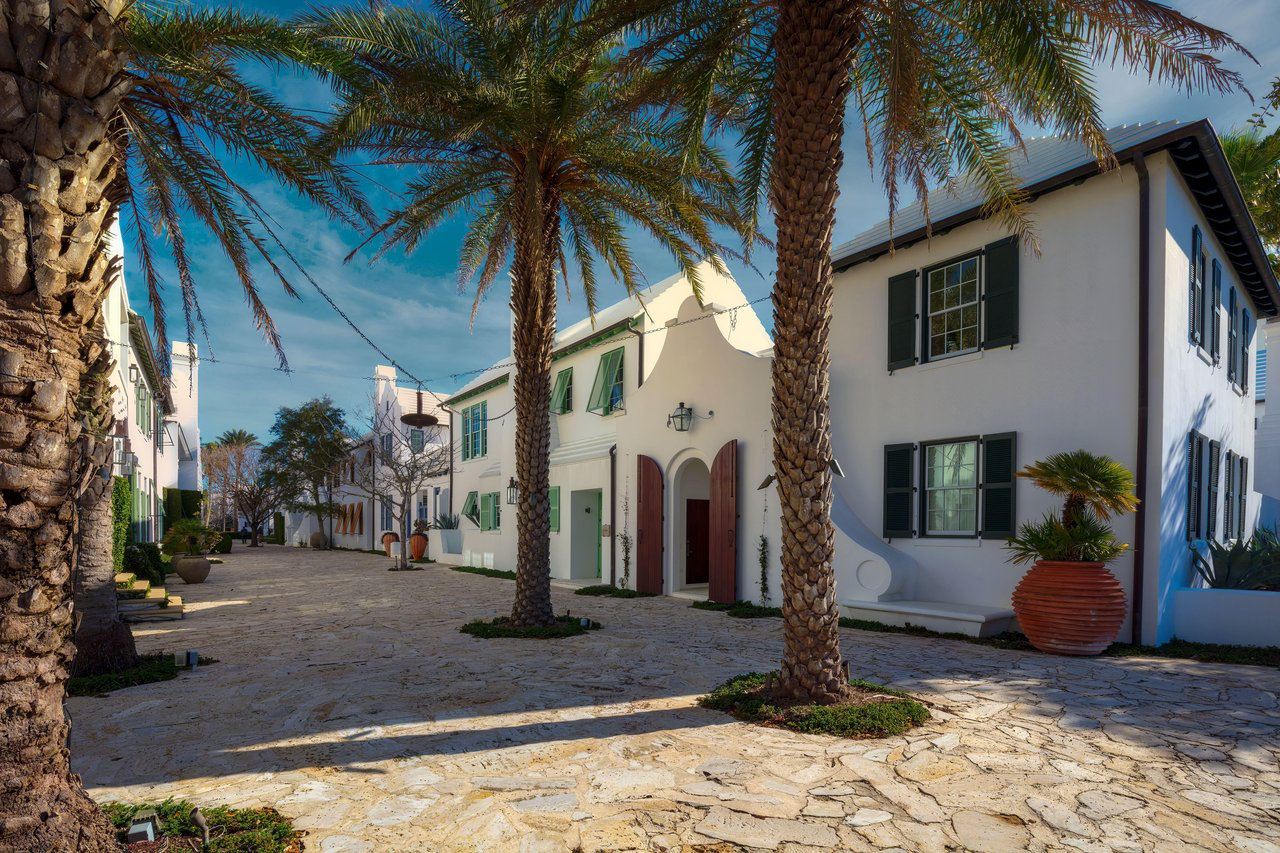
Alys Beach is trading near $1,761 per square foot, approximately 146% above the broader 30A market average.
Rosemary Beach is trading near $1,276 per square foot, approximately 79% above the market average.
Seaside is trading near $1,254 per square foot, approximately 76% above the market average.
Each experienced some softening through 2024 and early 2025. More recent readings, however, point toward renewed upward movement, particularly in Seaside.
Because transaction counts inside these communities can be limited, short-term changes should always be interpreted carefully. One exceptional sale can materially influence a monthly average.
The larger pattern is still important.
Capital continues to assign a substantial premium to the few communities on 30A with true national recognition, architectural cohesion, controlled development, limited supply, and a lifestyle that cannot be easily replicated elsewhere.
This is a flight to quality within luxury itself.
Alys Beach is not being valued solely as a collection of high-end homes. Buyers are purchasing a controlled architectural environment, private amenities, intentional design, and scarcity.
Rosemary Beach carries its own premium through walkability, established rental demand, mature landscaping, and one of the most recognizable town plans on the Gulf Coast.
Seaside remains historically significant as the birthplace of New Urbanism, with a level of identity and cultural relevance that extends far beyond Northwest Florida.
These communities are demonstrating that scarcity still commands value.
Even in a more selective market, capital continues to move toward the most distinctive addresses on 30A.
Mortgage Rates Have Not Removed Demand
The average 30-year fixed mortgage rate stood at 6.43% as of July 2, 2026, down from 6.67% one year earlier and below the 7.79% peak reached in October 2023.
Borrowing costs remain well above the unusually low rates available during the pandemic, but activity on 30A has remained relatively resilient.
That resilience speaks to the strength of the buyer base.
30A attracts cash purchasers, high-equity buyers, executives, business owners, investors, and families who are often less dependent on conventional financing than buyers in a typical primary-home market.
Rates still influence decision-making. They affect leverage, investment returns, carrying costs, and the opportunity cost of capital.
They simply do not tell the entire story.
Many buyers are evaluating 30A real estate as part of a broader wealth strategy. They may consider rental income, tax planning, family use, long-term appreciation, and the value of securing a scarce property in one of the Southeast’s most established coastal destinations.
The continued presence of those buyers is an important sign of market durability.
South Walton Continues to Draw From Strong Regional Wealth Centers
Despite 30A’s national profile, its ownership base remains strongly connected to the Southeast.
The ownership-record analysis used for this report found that Georgia, Tennessee, Texas, and Alabama represent approximately 60% of non-Florida ownership within the studied market
Atlanta and Nashville remain the two largest feeder cities, followed by Birmingham.
That regional concentration is one of 30A’s advantages.
South Walton sits within practical reach of several of the fastest-growing and most economically influential metropolitan areas in the South. Buyers can reach the area by car or through expanding regional air service, making 30A accessible for weekends, holidays, and extended stays.
For many families from Atlanta, Nashville, Birmingham, Dallas, and surrounding markets, 30A is not an occasional vacation destination. It is part of their lifestyle.
That connection has been built over decades.
The market is supported by repeat visitors, multigenerational ownership, business leaders, retirees, and families who already understand the communities and intend to return year after year.
Demand can certainly be influenced by wealth conditions in those feeder markets. But the depth of that relationship also gives 30A an established base that many emerging coastal destinations do not have.
Correctly Positioned Properties Are Still Moving
The most useful finding in the analysis is also one of the most encouraging.
Properly priced homes are still reaching the market.
The valuation model used for this report compares listings with a computed estimate of modeled fair value.
Historically, properties listed at or below modeled fair value reached contract in a median of approximately 63 days, compared with 72 days for homes positioned above modeled value.
In the current pending pool, the difference is more pronounced.
Listings positioned at or below modeled fair value reached pending status in a median of approximately 34 days.
Listings positioned above modeled fair value required approximately 87 days.
The lesson is not that sellers must discount exceptional properties.
It is that the market is recognizing value quickly.
Buyers are still willing to pay premiums for superior construction, Gulf frontage, protected views, strong rental performance, architectural distinction, private amenities, rare land, and irreplaceable locations.
What they are less willing to do is pay a premium that is not supported by the property itself.
That creates an advantage for sellers who approach the market with discipline.
A home that is accurately priced, professionally presented, and supported by a thoughtful marketing strategy can separate itself quickly from competing inventory.
The data confirms that buyers are present.
They are simply waiting for the right opportunity.
What the 2026 Market Means for Sellers
For sellers, the current market offers a clear path forward.
Success begins with understanding how the property fits within today’s competitive landscape.
That means evaluating recent sales, current inventory, replacement cost, construction quality, condition, rental performance, community strength, and the features that make the home difficult to replicate.
Presentation matters more in a market where buyers have options.
Professional photography, cinematic video, thoughtful staging, targeted digital advertising, feeder-market exposure, agent outreach, and strong property storytelling can materially influence how a listing is received.
The market is not rejecting luxury.
It is distinguishing between luxury that is merely expensive and luxury that is truly differentiated.
Sellers who recognize that distinction are still achieving successful outcomes.
What the 2026 Market Means for Buyers
For buyers, the current environment may be one of the most attractive periods 30A has offered in years.
There is more inventory, more time for due diligence, and more opportunity to negotiate price and terms than existed during the height of the market.
Buyers can be selective without being inactive.
The best opportunities may be found where a property combines current negotiating leverage with long-term scarcity. That could include a Gulf-front home, a coastal dune lake property, a well-constructed residence in an established community, or a home with protected views and a location that cannot be recreated.
The strongest assets may not remain available simply because the broader market carries more inventory.
Exceptional real estate still behaves differently.
The goal is not merely to purchase at a discount.
It is to secure the right property at an intelligent basis.
That is where long-term value is created.
The Takeaway
The 30A real estate market in 2026 is not defined by retreat.
It is defined by refinement.
The corridor has moved beyond the indiscriminate appreciation of the pandemic era and entered a phase where quality, scarcity, community, condition, and pricing determine performance.
The broad luxury market has normalized. The middle tiers continue to produce meaningful activity. Buyers have regained negotiating leverage. Properly positioned listings are still moving quickly. And the most iconic communities in South Walton continue to command extraordinary premiums.
For sellers, opportunity lies in accurate positioning and exceptional presentation.
For buyers, opportunity lies in choice, leverage, and the ability to focus on the properties with the strongest long-term fundamentals.
This market is more selective than it was several years ago.
That may ultimately make it stronger.
Because 30A is no longer being carried by urgency alone. It is being supported by scarcity, lifestyle, regional wealth, architectural identity, and a buyer base that continues to place lasting value on one of the most distinctive coastal markets in the Southeast.
The next chapter of 30A will not reward every property equally.
It will reward the right property.
And for buyers and sellers who understand the difference, the opportunities remain significant.
To understand how these trends apply to a specific property, community, or investment strategy, contact The Gettings Group for a confidential, property-level market analysis.