
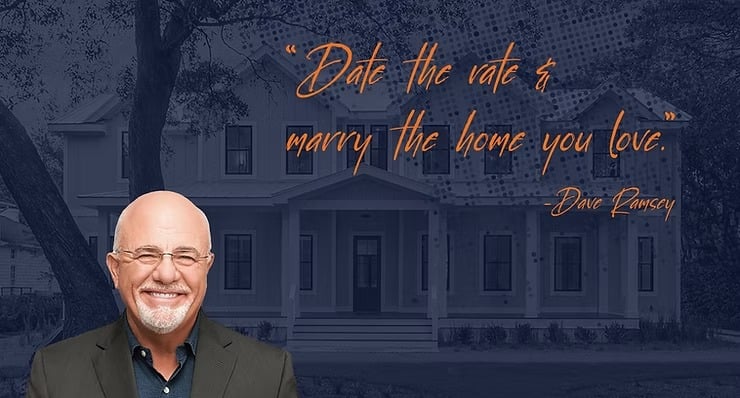
If you’ve spent any time researching homebuying strategies, you’ve likely heard the phrase “Marry the home, date the rate.” Popularized by financial expert Dave Ramsey, this strategy suggests that buyers should focus on securing the right home for their needs rather than waiting for interest rates to drop. The idea is simple: commit to the home you love (marriage), but keep your mortgage rate flexible with the option to refinance later (dating).
Don’t wait for the perfect market—marry the house, date the rate, and start building your future today. #NikkiHaleyLive @DaveRamsey
While some buyers are hesitant due to current interest rates, history, market data, and financial principles support Ramsey’s perspective. Here’s why this strategy is a smart approach in today’s real estate market.
1. Real Estate Prices Tend to Appreciate
Historically, home values have steadily increased over time. According to the Federal Housing Finance Agency (FHFA), U.S. home prices have risen by an average of 4-5% per year over the last three decades. Even during economic downturns, the long-term trend remains upward.
This means that waiting for interest rates to drop could cost you more in home prices than you might save on mortgage interest. If you buy now, you’re locking in today’s price before values climb further.
2. Interest Rates Are Cyclical
Interest rates fluctuate over time. If you look at the historical data from Freddie Mac, the 30-year fixed mortgage rate has ranged from as high as 18% in the 1980s to as low as 2.65% in 2021. The key takeaway? Rates go up and down, but home prices don’t typically decline long-term.
By purchasing now, you secure your home and have the flexibility to refinance when rates improve. Ramsey’s approach recognizes that while rates are temporary, real estate appreciation is lasting.
3. Inflation and Rent Costs Keep Rising
One of the biggest financial risks is paying rent indefinitely. According to a report from the National Association of Realtors (NAR), median rental prices have increased by over 8% annually in many cities. When you rent, you’re subject to inflation, rising rents, and zero equity growth.
By buying a home—even with a higher interest rate—you start building equity immediately. That equity can later be leveraged to refinance, invest, or fund future financial goals.
4. You Can Always Refinance, But You Can’t Rewind Home Prices
If rates drop in the next few years (as many experts predict), homeowners can refinance to lower their payments. However, if you wait for lower rates, home prices may have risen significantly.
For example:
- A $400,000 home at a 7% rate today results in a higher payment but locks in that price.
- If rates drop to 5% in two years, you can refinance and reduce your payment.
- But if that same home appreciates to $450,000, you may end up paying more overall, even if you secure a lower interest rate later.
5. Homeownership Is a Hedge Against Inflation
Real estate is one of the best hedges against inflation. As the dollar’s purchasing power decreases, the value of tangible assets—like real estate—increases. Homeowners benefit from this natural appreciation, while renters bear the brunt of inflation through rising rent costs.
Ramsey’s philosophy aligns with this: lock in your home now, enjoy the benefits of homeownership, and adjust the financing later.
If you're wondering whether or not to wait to buy a house, this is the video to watch! Dave Ramsey provides a balanced perspective on the current market, explaining the risks and benefits of buying now or waiting. Ultimately, the decision is up to you, but this video will help you make an informed decision.
Bottom Line: The Right Home Is Worth the Commitment
Dave Ramsey’s “Marry the home, date the rate” approach isn’t about rushing into a bad deal—it’s about focusing on what matters most:
Finding a home that fits your needs and building wealth through ownership.
- Home prices are rising, but mortgage rates are temporary.
- You can refinance later, but you can’t go back in time to buy at today’s prices.
- Owning builds wealth; renting does not.
If you find the right home, don’t let interest rates scare you away. Commit to the property, build equity, and when the time is right, refinance. That’s the smart play for long-term financial success.